




Archaeology of Everyday
For SWAB Barcelona Art Fair, Widefield presents Sabrina Fernandez Casas, Jean-Marie Fahy, Matheline Marmy and Jonathan Vidal. Curated upon invitation of Widefield by Benjamin S. Elliott.
Archaeology of Everyday brings together four artistic positions that interrogate the traces of past and present human presence through ordinary objects, body gestures, and forgotten choreographies. In an era marked by digital acceleration, economic hyper-efficiency, and the erosion of physical spaces, this exhibition foregrounds artisanal and material-driven practices as vital sites of resistance, ecological consciousness, and poetic imagination.
Looking both backward in time and towards potential futures, the exhibition operates as a meta-futuristic archaeology. It examines the artefacts of our surroundings and elemental processes: raw ore extraction, ceramics, cast metals, paper production and inherited furniture are seen as vessels holding invisible human histories and shifts yet to come.
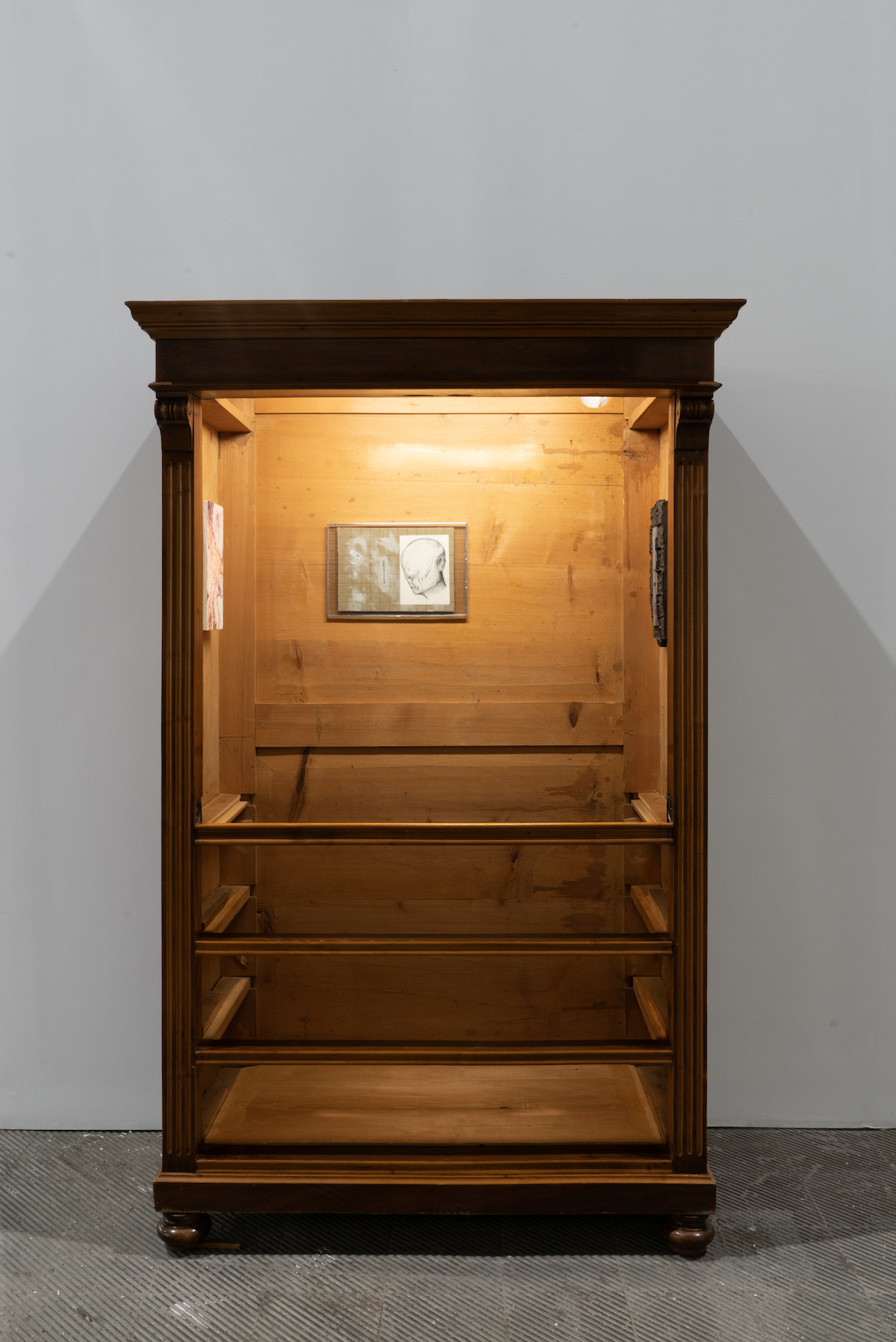
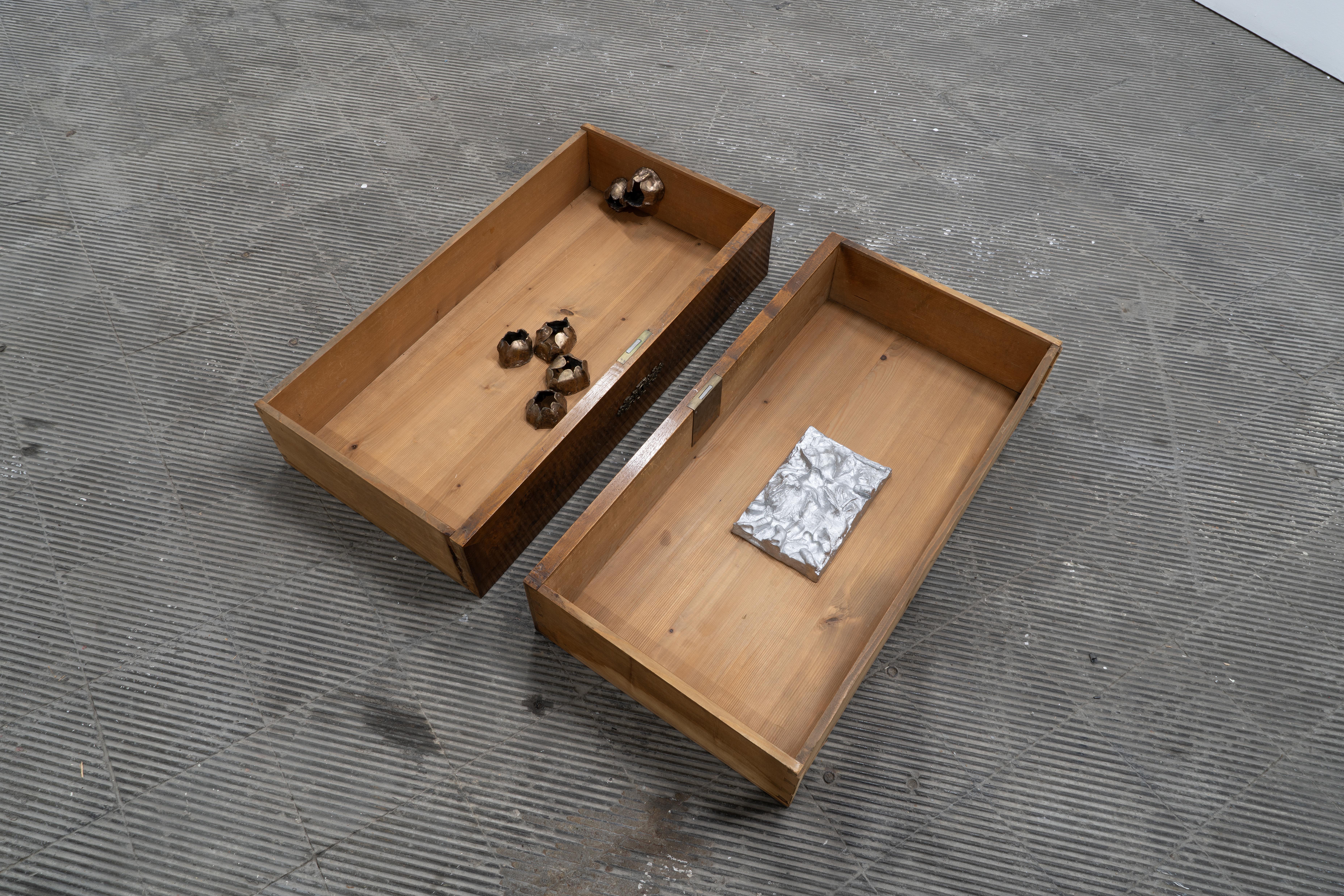
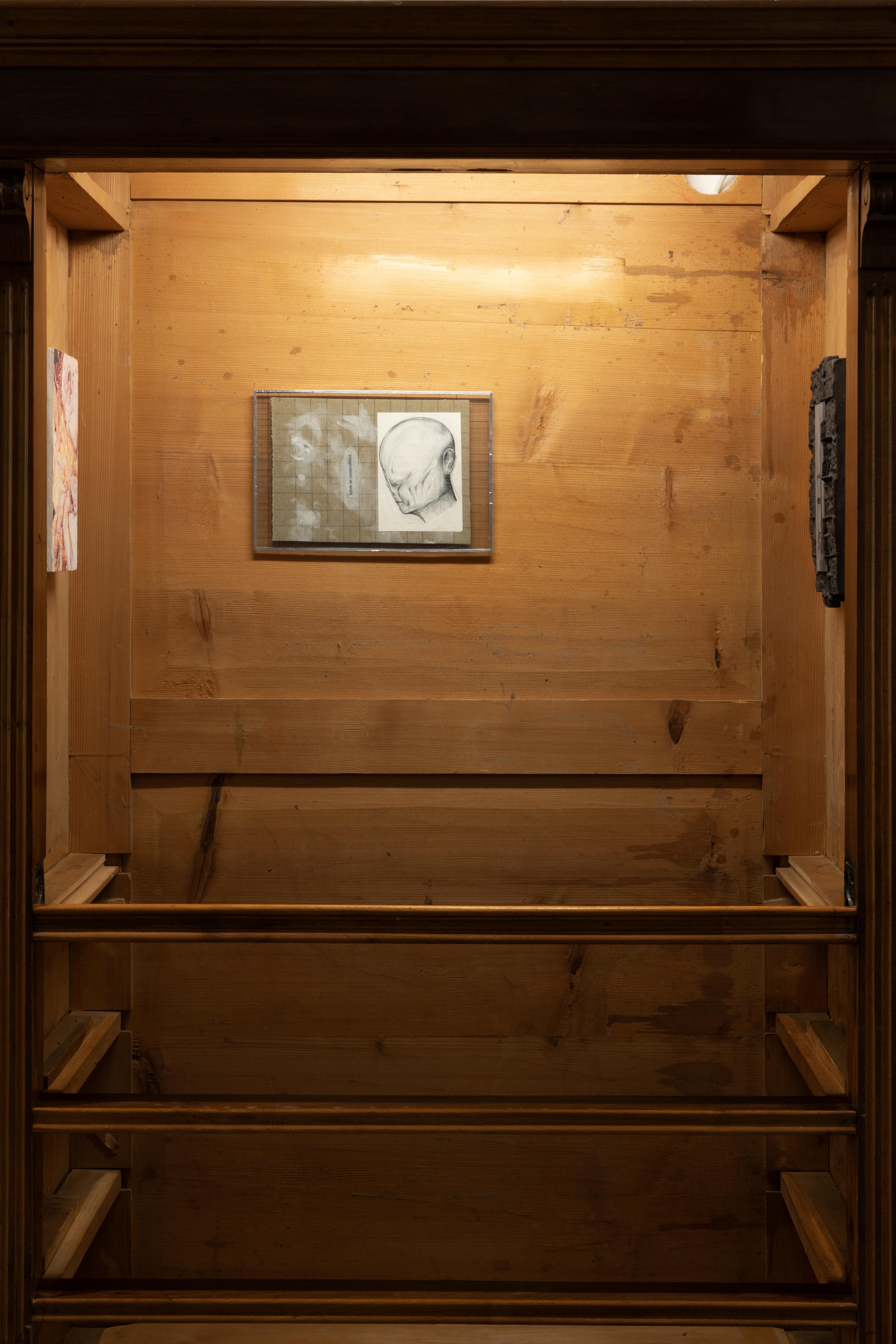
The selected works are integrated into a site-specific installation built from an old-fashioned secretary desk. Transforming the utilitarian furniture into a sculptural architecture of curiosity, concealment and play, this domestic display evokes the historical Wunderkammer (cabinet of curiosities). By inviting visitors to engage spatially with the furniture, the display bridges human and functional space with artistic inquiry, making the exhibition an embodied experience of memory and touch.
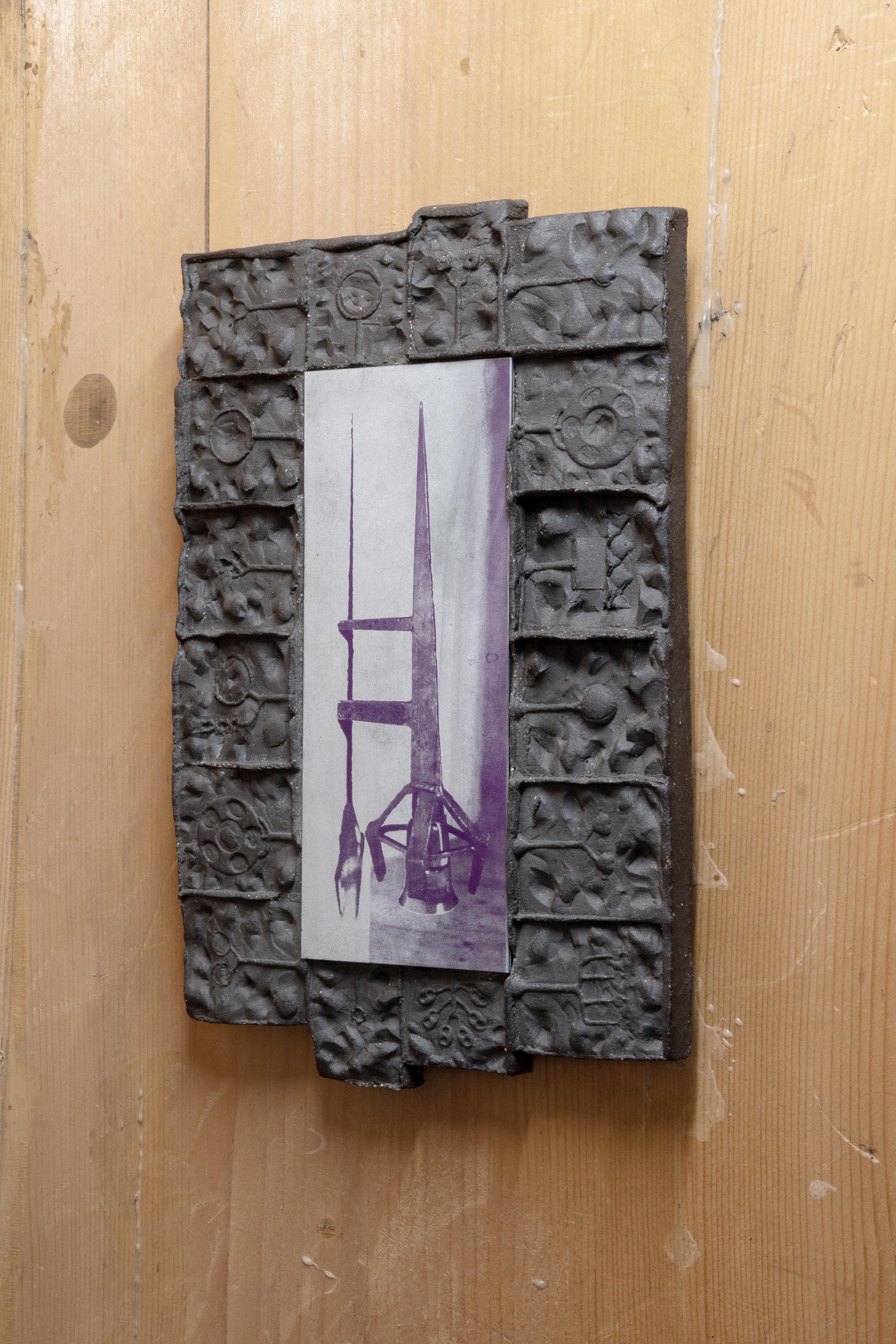
Fernández Casas investigates the ecological and industrial history of Galicia, marking the rural exodus and the environmental scars left by Francoist eucalyptus monoculture, paper manufacturing, and recurrent wildfires. By pairing found objects whose original utility has ended with fired ceramics her practice introduces cycles of decay and renewal. Through subtle seriality, she considers how progress leaves behind fragments that can be reclaimed and re-rooted.
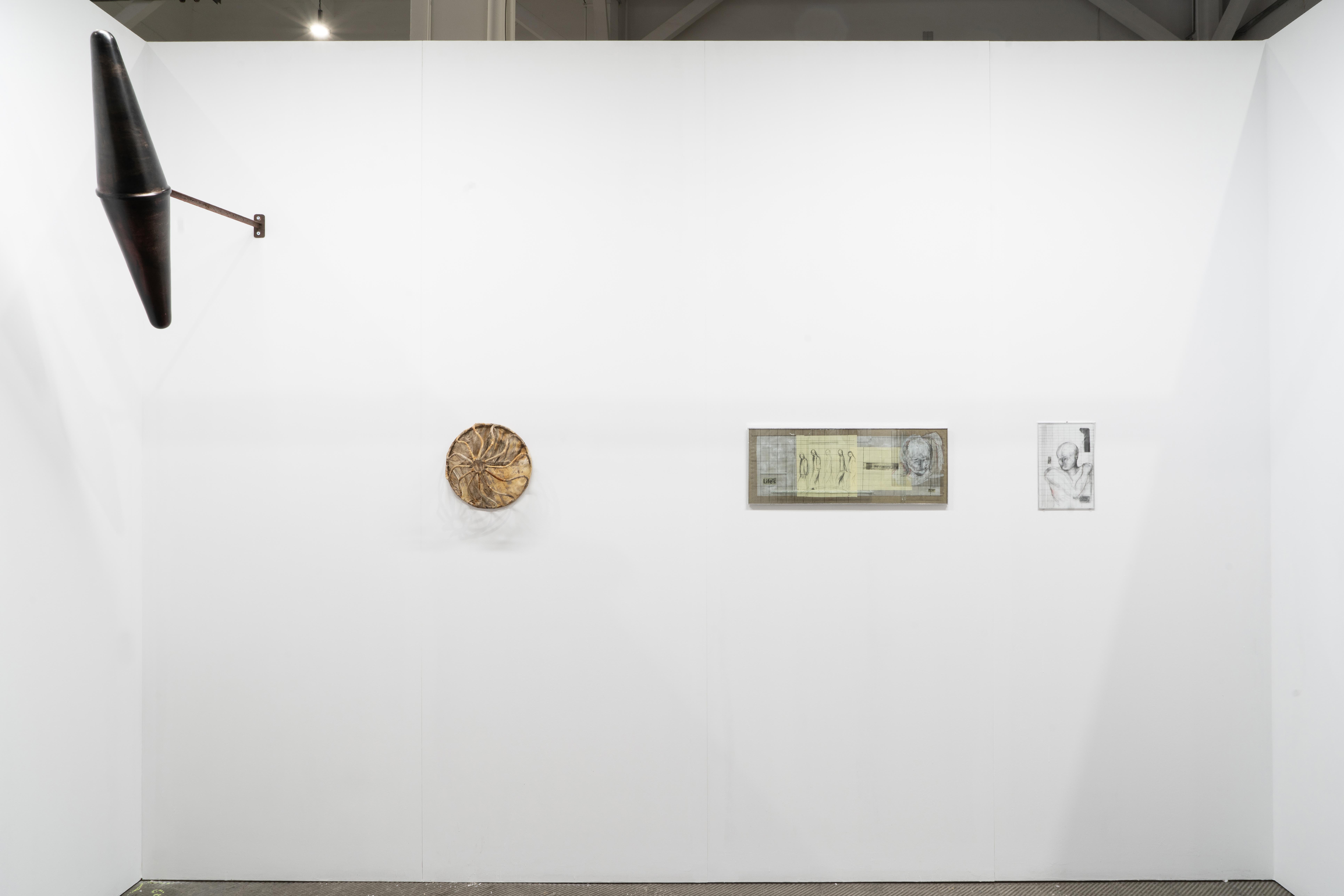
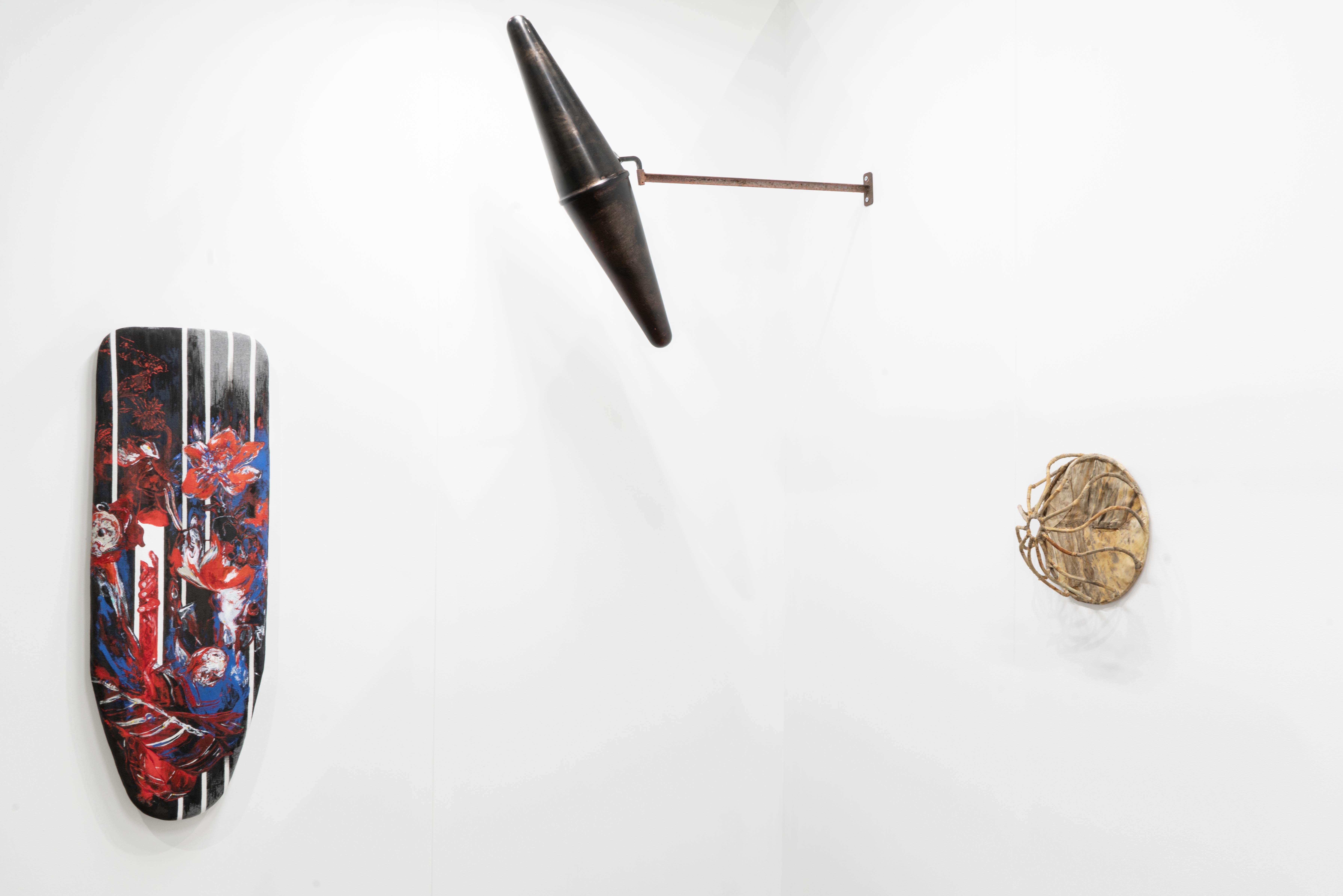
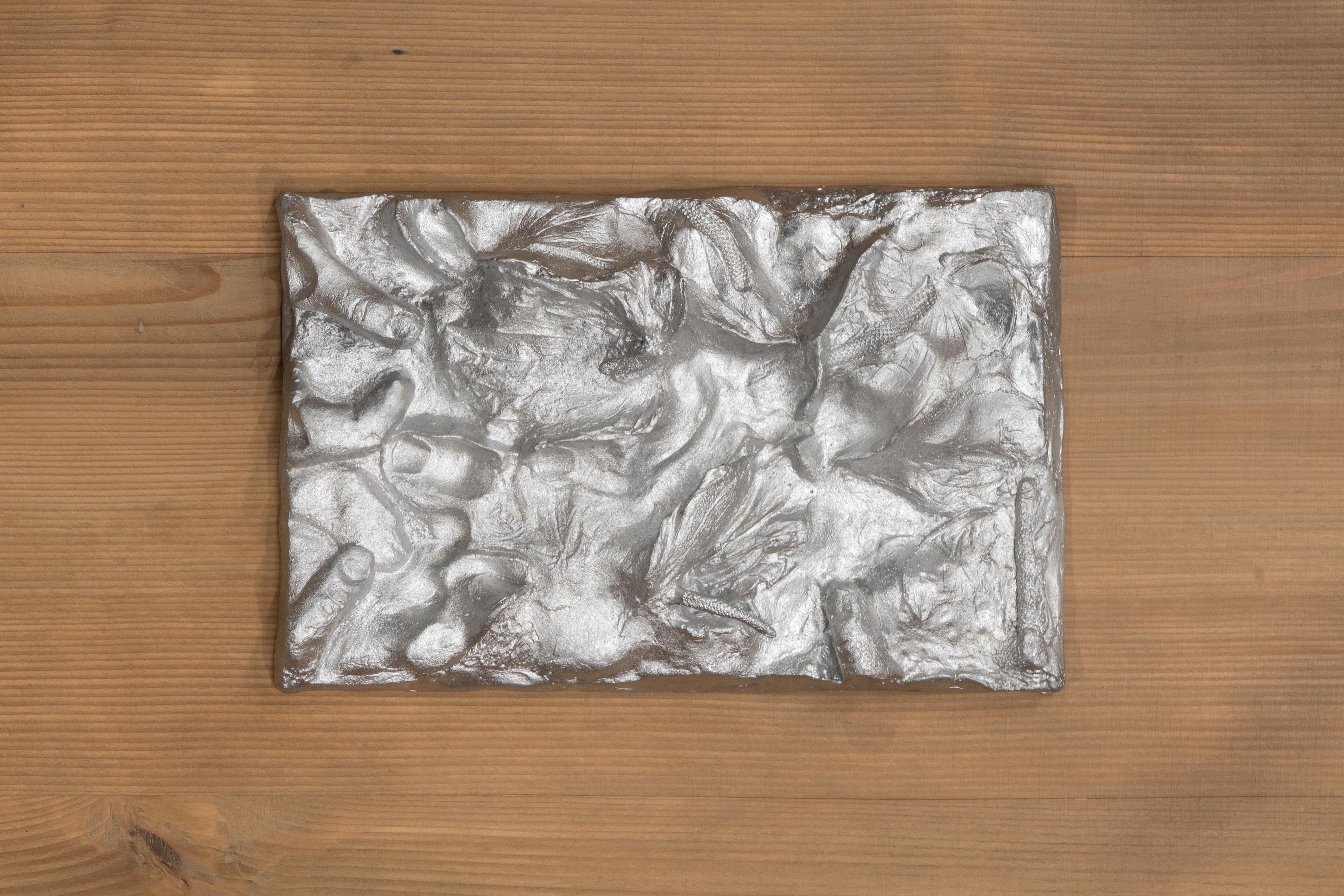
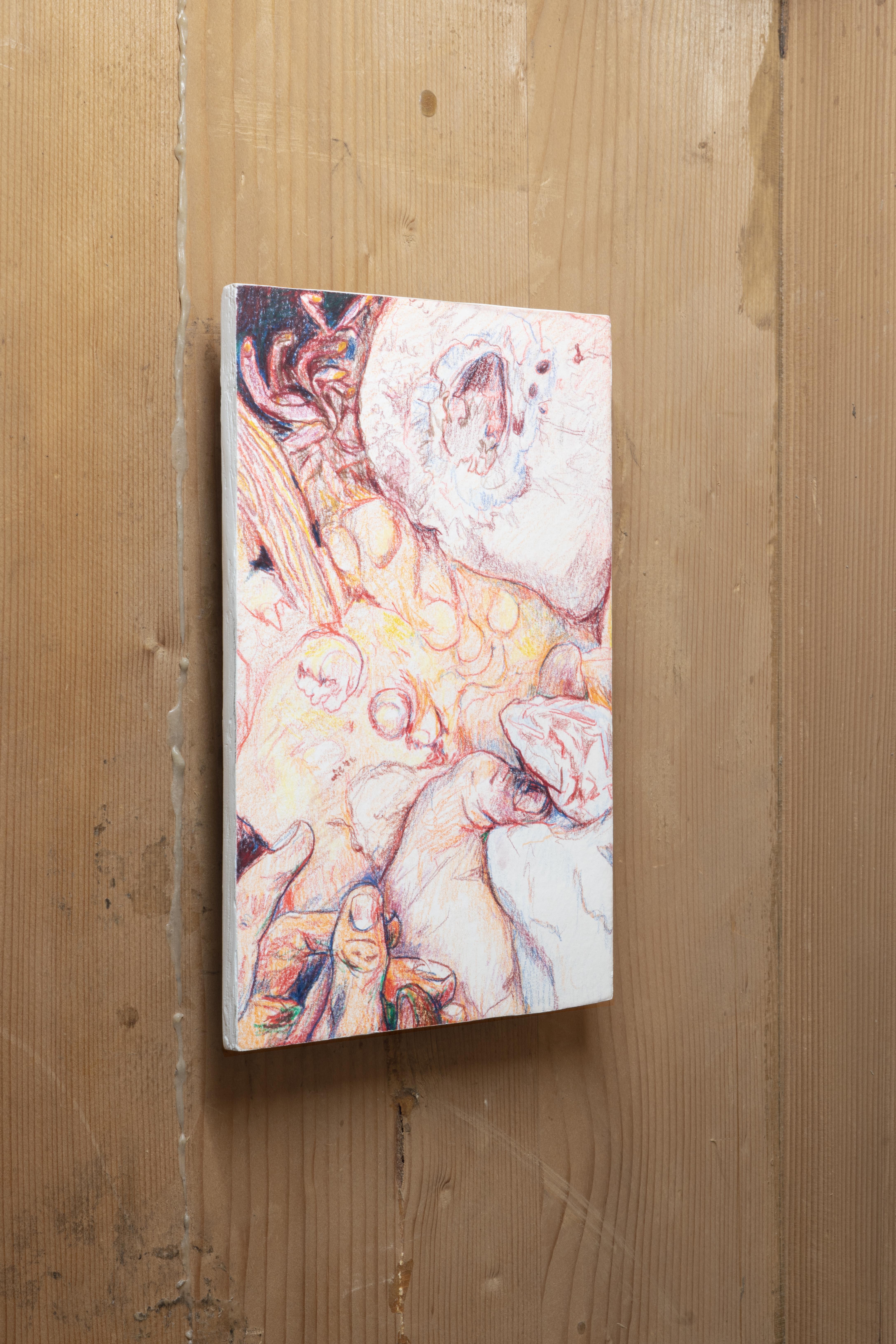
Fahy approaches the daily repetition of domestic gestures as an archaeology of the present moment. His works focus on the shared bodily memory of household chores. By combining commercial wallpaper motifs on an utilitarian ironing board cover, an aluminum casting, and coloured pencil drawing on paper and wood, Fahy creates a distinct physicality through stratification. These layered surfaces function as a second skin that retains the memory of contact and space, turning ordinary routines and private spaces into subtle, tactile records of human presence.
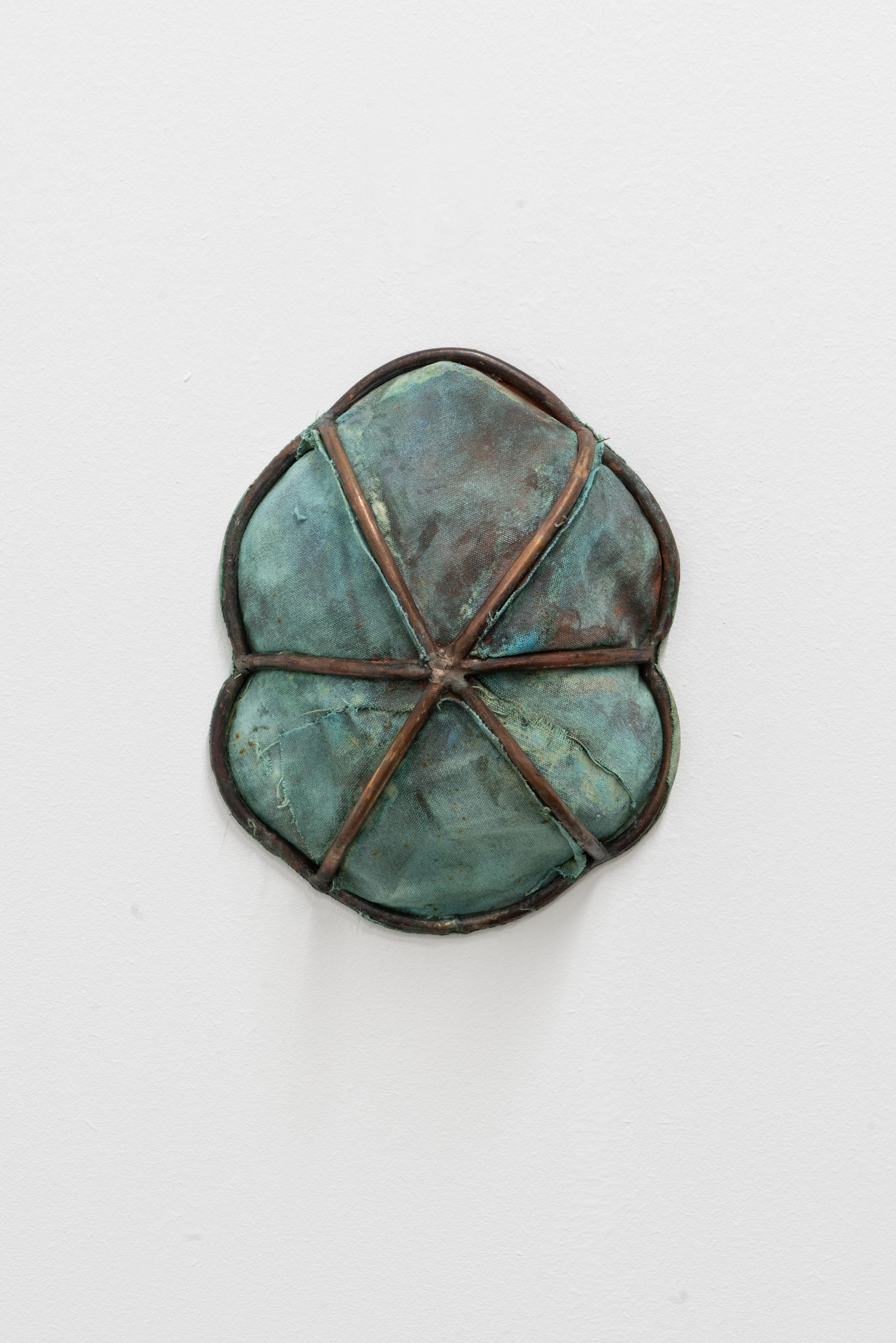
Marmy investigates sculpture as an ongoing, living process where control yields to material agency. Drawing inspiration from biologist Lynn Margulis’s concept of water as a time capsule, Marmy treats matter as a vehicle for deep time and biological transformation. In her sculptures of cast natural bronze, copper, copper oxide, and textiles, she establishes a dialogue between "servant" holding structures and "served" reactive elements. Absorbent fabrics capture environmental humidity and chemical reactions, acting as receptacles that index mutations, corrosion, and uncontrolled outgrowth over time. Spanning the mechanical and the organic, her works set their own temporalities, capturing a state of perpetual becoming.
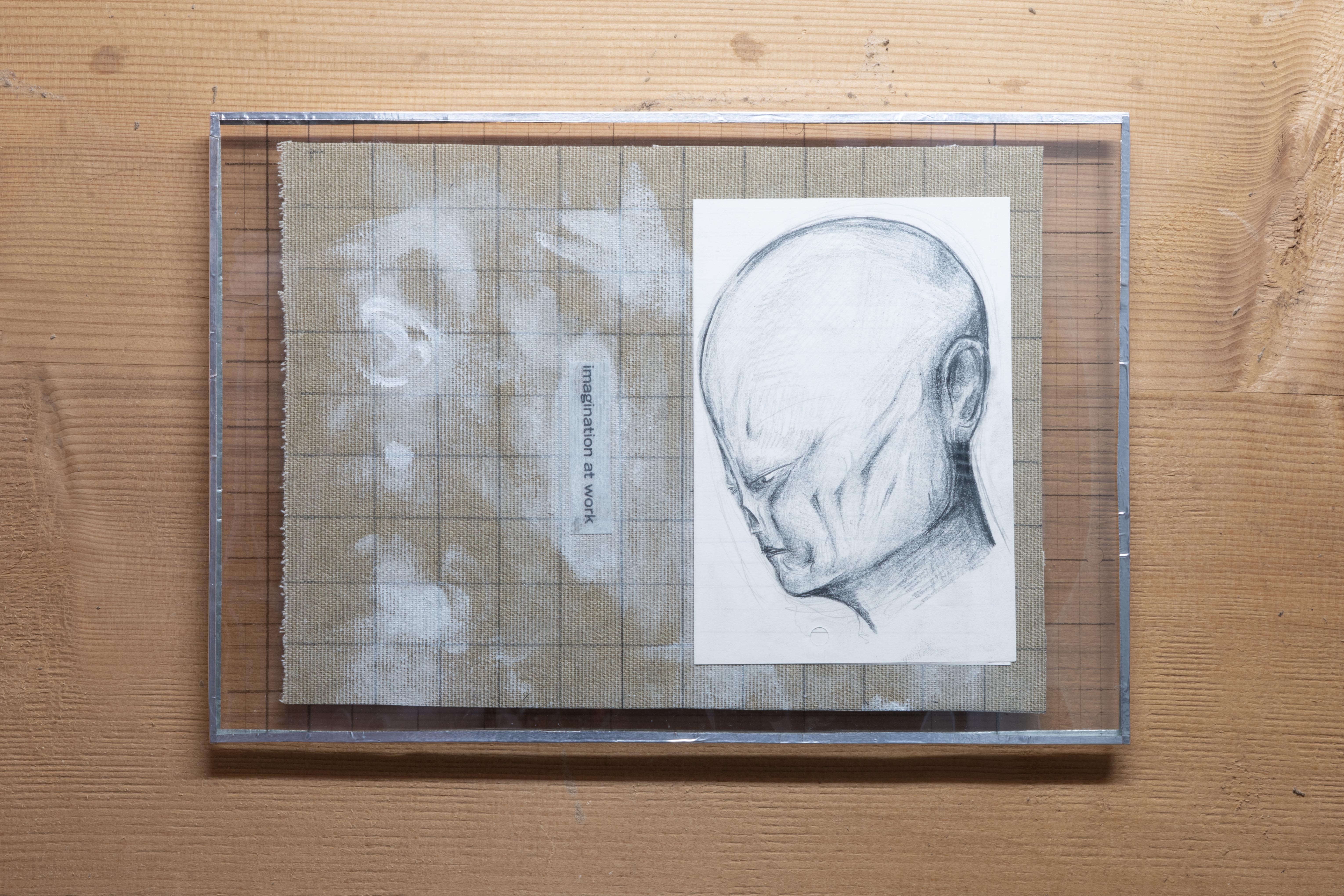
Vidal investigates the language and visual culture of modern political systems during a period of shifting global dominance. Referencing both the archives he found at International Center for Researches on Anarchismes (CIRA) and The Economist magazine, Vidal maps the erosion of the US hegemony and the ongoing transition into a digitised, dematerialised world. His practice pairs transparent acetate, glass, aluminum, and linen canvas with graphite, toner pigments, and laser prints. Across these layered, glass-encased structures, automated face drawings and recurring political keywords expose the ambiguous overlap between authoritarian rhetoric, capitalist agendas, and social resistance.
Concluding Note: The First Gesture
In her essay The Carrier Bag Theory of Fiction (1986) Ursula K. Le Guin proposed that the first object made by our species would have been a container; a bag, a bottle, or a net. A kind of external stomach allowing for gathering and holding. For Le Guin, it alone would have preceded narrative, an appendage extending from the oesophagus, retaining invisible content perceptible only through its activation and its sharing.
Gathering, picking up, and holding remain intentional gestures across the works in Archaeology of the Everyday. Through casting, collecting, and arranging, the artists treat both their materials and the domestic furniture holding them as contemporary carrier bags: vessels that store invisible contents, activated only through human encounter and collective attention.